
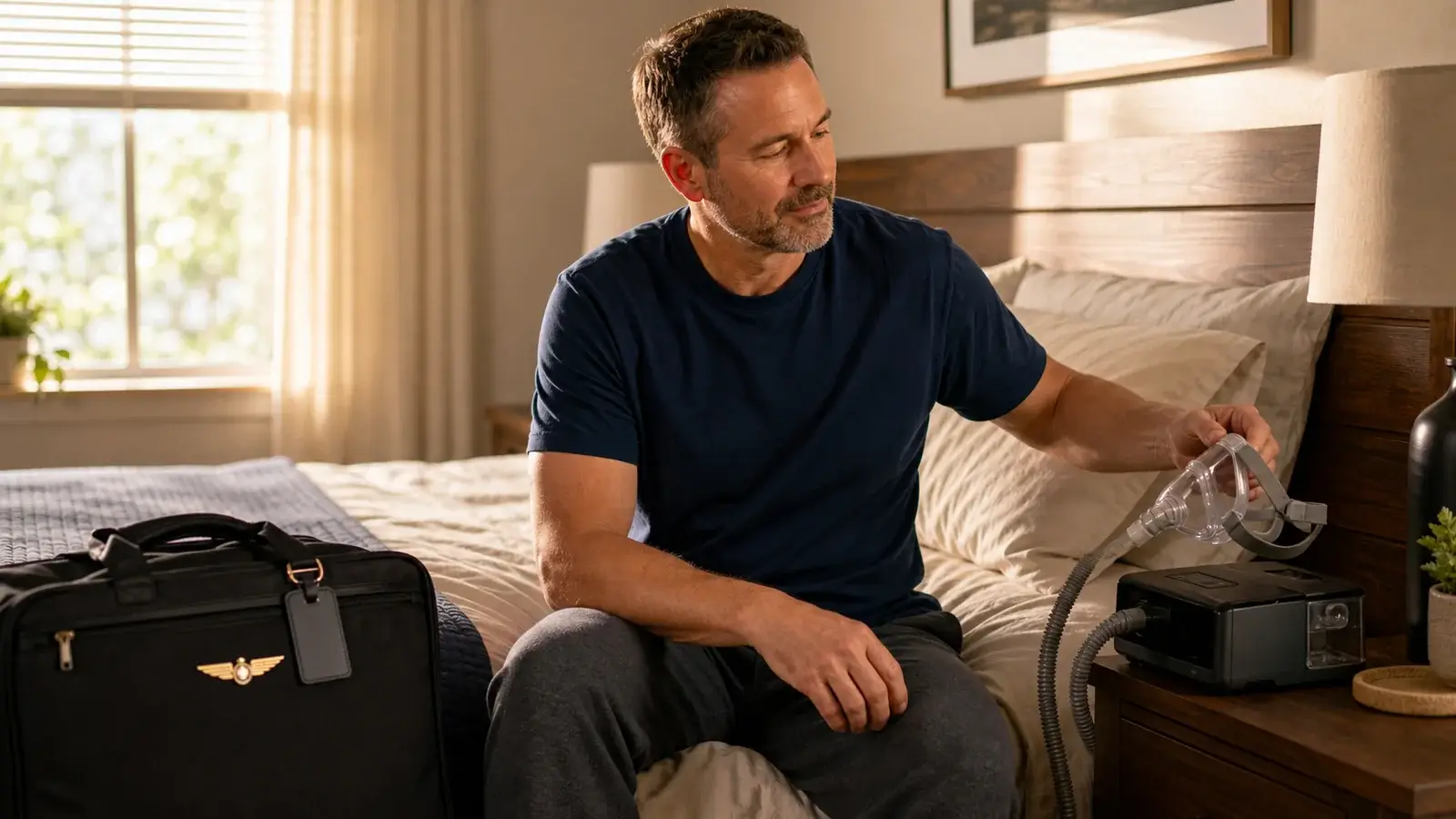
For pilots managing obstructive sleep apnea, effective PAP therapy can help them maintain their FAA medical certification. Using the device is only part of the process. Understanding what the FAA expects for compliance documentation and keeping those records complete year after year is equally important. This article walks through the basics of PAP compliance for FAA medical renewal.
Why PAP Compliance Matters for Your Medical
When a pilot is diagnosed with obstructive sleep apnea, the FAA’s core question is straightforward: is treatment effective, and are symptoms adequately controlled? A Special Issuance medical certificate depends on documenting that the condition is being managed. For pilots prescribed PAP therapy, that includes consistent usage, treatment effectiveness, and follow-up with the treating physician.
Strong, consistently documented PAP compliance helps support renewal. Gaps in usage or incomplete records may lead to requests for additional information and delays. Keeping up with treatment, reviewing your data throughout the year, and coordinating with your physician and AME can help reduce avoidable documentation problems.
What the FAA Typically Wants to See
For pilots using PAP therapy, the FAA’s Special Issuance renewal expectations generally include:
Consistent PAP usage. The FAA’s target is use during at least 75 percent of sleep periods, averaging at least six hours per sleep period.
A compliance report covering the past 12 months. The report should show actual usage time, rather than simply whether usage exceeded four hours. If you use more than one PAP device, include data from each. [1]
Documentation that treatment is effective. The FAA’s OSA Treated Status Report includes a treated apnea-hypopnea index (AHI) of five or less, effective and well-tolerated treatment, and no ongoing symptoms such as daytime fatigue or cognitive impairment. [2]
A current treating provider’s report. Your provider should document compliance, treatment effectiveness, tolerance, and any remaining symptoms, using the FAA’s OSA Treated Status Report or a current clinical note addressing all required items. [2]
Follow the requirements in your individual FAA authorization letter and coordinate with your AME. Initial certification has different reporting requirements, and the FAA may request additional documentation based on your history.
Where Pilots Run into Trouble
Consistent treatment and documentation help keep renewal on track, but there are a few common ways pilots get tripped up:
Skipping treatment during travel. Pilots who travel frequently sometimes leave their PAP device at home. Missed sleep periods can reduce overall usage and put compliance at risk.
Using the PAP device for too few hours. The FAA’s target is use during at least 75% of sleep periods, averaging at least six hours per sleep period. Removing the mask after a couple of hours can bring that average down.
Not reviewing compliance data throughout the year. Waiting until right before renewal may leave too little time to address gaps in usage or documentation.
Not checking how compliance data is recorded and retrieved. Confirm with your equipment provider that your PAP device records usage and that you can obtain a complete compliance report, including data from any travel or replacement device.
Missing physician follow-up. Keep up with follow-up appointments and obtain the current treating physician documentation required for your renewal.
How to Stay Ahead of It
Compliance is a year-round habit, not a renewal-week scramble. A few practical suggestions:
Make PAP part of your routine. Bring your device on trips and use it as prescribed during sleep.
Review your compliance data monthly. Check your device’s app or request a report from your equipment provider. Regular reviews can help you spot gaps in usage and address problems before renewal.
Stay in contact with your treating provider. Follow the recommended appointment schedule and the documentation requirements in your FAA authorization letter. Contact your provider if you have difficulty using therapy or experience persistent symptoms.
Keep your equipment maintained. Follow the manufacturer’s cleaning and replacement instructions, check for mask leaks, and address equipment problems promptly to help prevent interruptions in treatment.
What to Do If You Fall Out of Compliance
If your PAP compliance numbers are below the FAA’s targets as renewal approaches, speak with your treating physician and AME promptly. Provide complete, accurate records and work with your physician to identify and address the reasons for the gaps.
Document equipment problems, travel disruptions, difficulty tolerating therapy, or other circumstances that affected your usage. Your physician can explain those issues and the steps taken to improve treatment. Continue using PAP as prescribed and retain your full compliance history. A recent improvement does not replace the reporting period required for renewal.
Your AME can help clarify what additional information is needed under your FAA authorization. Addressing problems early can help reduce delays, although the renewal outcome depends on your individual circumstances.
How ESD Fits In
ESD provides Type II sleep testing, which is the diagnostic side of the equation. We do not sell or fit PAP equipment. We help pilots understand where they are in the sleep apnea process, what the FAA typically expects, and connect them with providers for treatment and compliance documentation.
If you need a diagnostic sleep study, have been asked by your physician or the FAA to complete additional testing, or want help understanding the next steps, contact the ESD team. Dave and the team can help you navigate the process alongside your treating physician and AME.
If you need treatment after a diagnosis, ESD can help connect you with providers familiar with PAP therapy and the documentation pilots may need for the FAA. Confirming that your provider can supply the required treatment records and compliance reports can help prevent documentation problems at renewal.
Treat compliance as a year-round routine. Keep your treatment records organized, review your compliance data monthly, and stay in contact with your treating provider. Addressing gaps early and keeping complete records can help reduce last-minute stress and avoidable delays.